
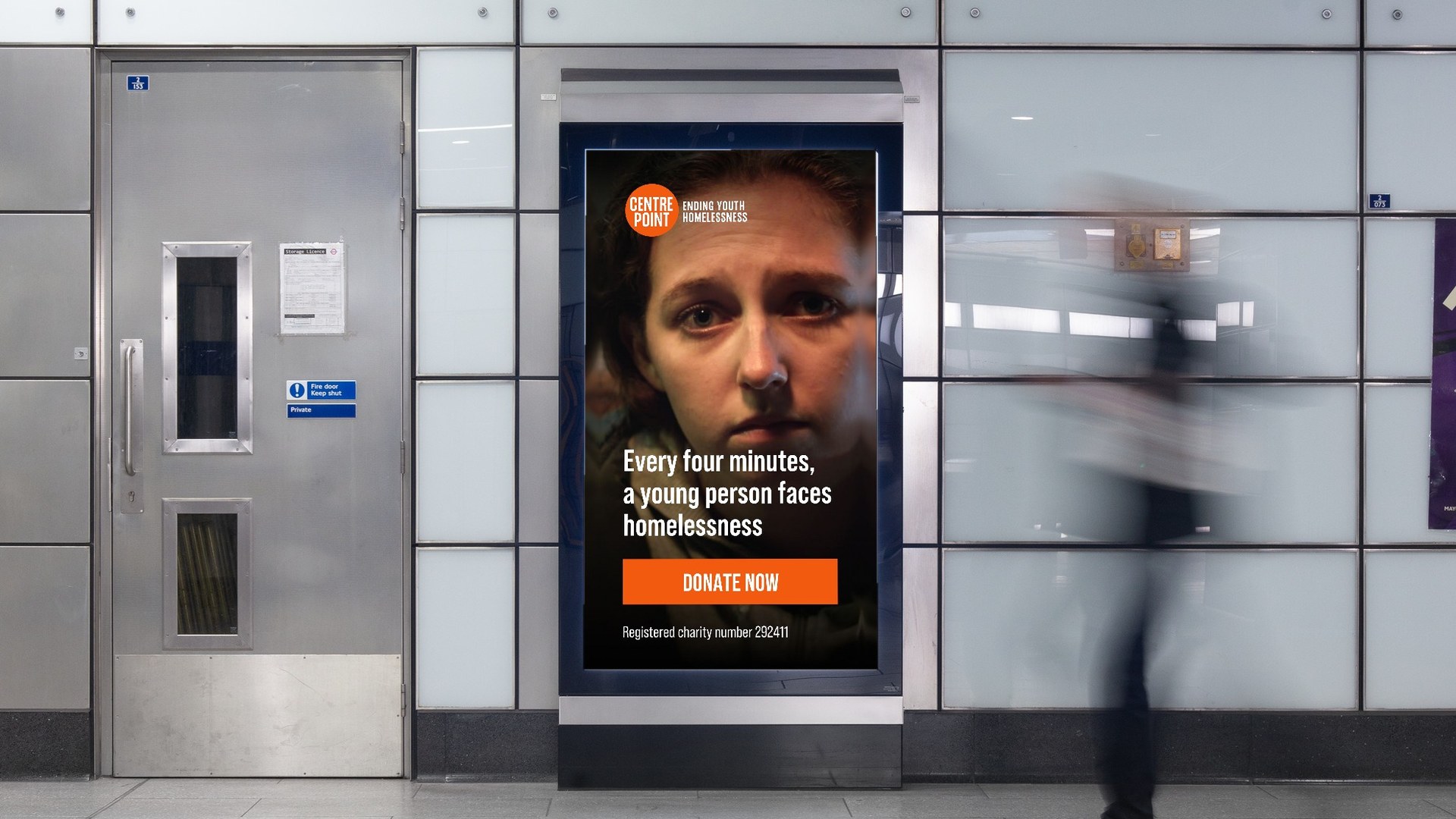
D6 is the UK industry name for a digital 6-sheet: a portrait screen about the size of a bus shelter poster, found at roadsides, in shopping centres, rail stations and supermarkets. It is the most common digital out-of-home format in the country, and the one most campaigns include.
This guide gives the D6 specs that matter for artwork, how they differ between media owners and environments, and how to design for a screen people pass in a few seconds. We produce DOOH creative for every UK network, so the checklist at the end is what we run before every delivery.
Key Takeaways
- A D6 is portrait, 9:16, at 1080 x 1920 pixels on every major UK network.
- Spot length depends on the owner and environment: JCDecaux roadside D6 runs 12 seconds static, its mall, rail and supermarket D6 run 6 seconds; Global’s D6 slots are 10 seconds.
- Roadside D6 is usually static only. Mall, rail and retail D6 often allow motion.
- Deliver RGB JPEG or PNG for static and H.264 MP4 for motion, at the frame rate the owner asks for.
- Always check the specific network spec. The same size can have different rules on different frames.
| Network | Environment | Size | Spot length | Static or motion | Files |
|---|---|---|---|---|---|
| JCDecaux Digital 6-sheet | Roadside | 1080 x 1920 | 12 s | Static | JPEG |
| JCDecaux Digital 6-sheet | Mall, rail, supermarket | 1080 x 1920 | 6 s | Static or motion (25 fps) | JPEG, MP4 |
| Global D6 | Roadside | 1080 x 1920 | 10 s | Static | JPEG, PNG |
| Global D6 | Retail | 1080 x 1920 | 10 s | Static or motion (30 fps) | JPEG, PNG, MP4 |
D6 Size and Resolution
Every D6 network we deliver to uses 1080 x 1920 pixels, portrait. Build artwork at exactly that size, in RGB, at 72 dpi. Print habits (CMYK, bleed, crop marks, 300 dpi) cause rejections or colour shifts on screen.
Some owners also run 4K portrait screens or landmark frames with their own resolutions. If a plan includes those, they are listed separately on the owner’s frame list.
Spot Length and Loops
A D6 screen plays a loop of ads, and each ad gets a fixed slot. On JCDecaux, roadside D6 slots are 12 seconds and mall, rail and supermarket D6 slots are 6 seconds. Global uses 10-second slots across its D6 inventory. If your file is longer than the slot it will be cut or rejected; if it’s shorter, the last frame holds.
People rarely watch a whole slot. They see a few seconds as they pass, often mid-loop, so every frame of a motion ad should still make sense on its own.
Static vs Motion
- Roadside D6: usually static only, because of road safety rules. Some owners allow a slow transition between static frames. Treat it as a poster that changes.
- Mall, rail and retail D6: motion is often allowed. Keep it smooth and simple: a product reveal, a slow push in, text building on.
- Frame rate: JCDecaux asks for 25 fps; Global for 30 fps. Export to the owner’s figure, H.264 MP4, no audio.
- File size: limits vary by owner (Global’s retail and roadside D6 allow up to 20 MB; JCDecaux allows up to 100 MB). Smaller files upload and approve faster.
Designing for a D6
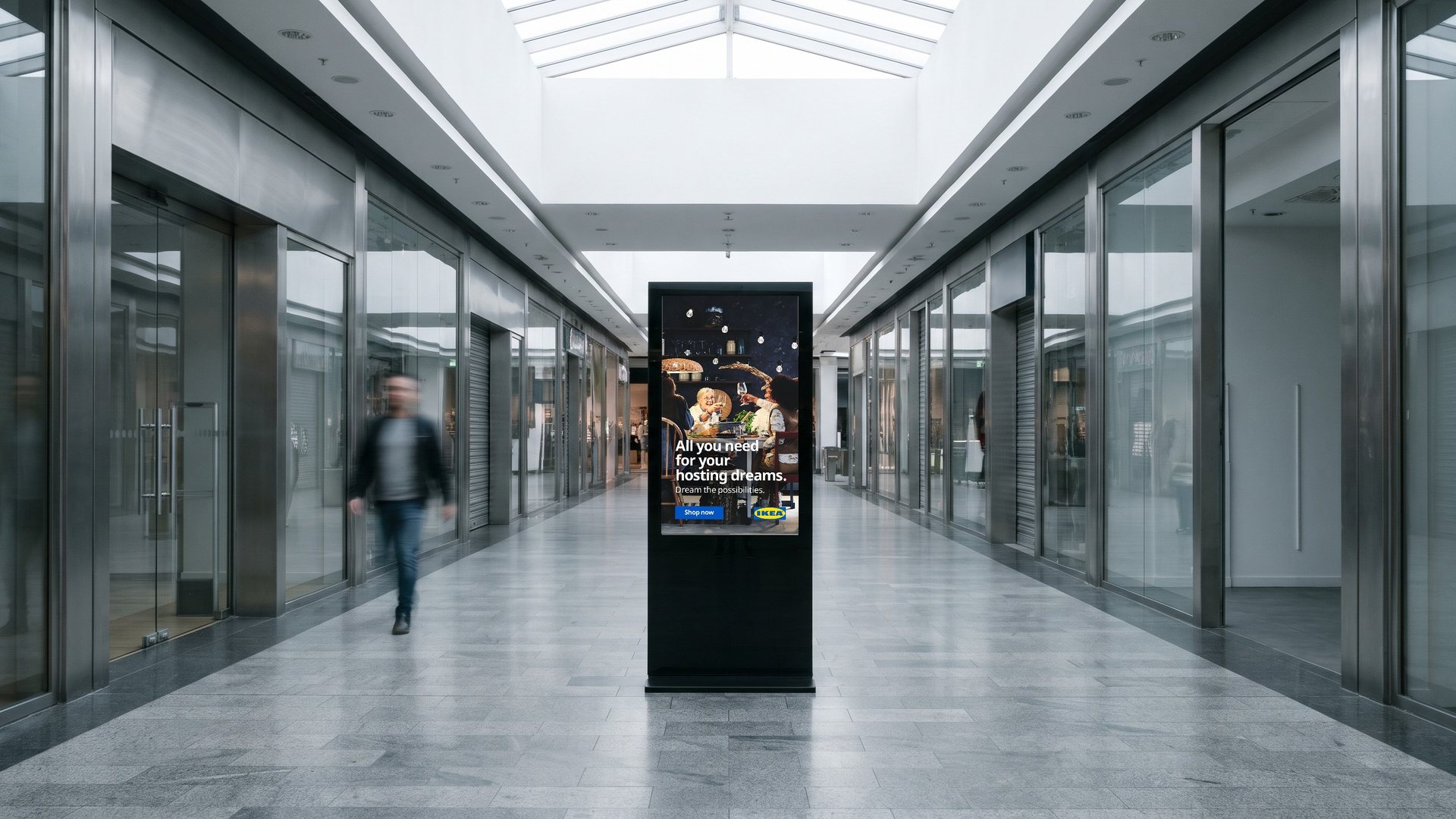
- Seven words or fewer. A D6 is read from a few metres away while walking or driving.
- Big brand, big product. Logo large enough to read from across the pavement, product filling the frame.
- High contrast. Screens compete with daylight, shop lights and reflections. Avoid thin type and pale-on-pale.
- Keep away from the edges. Frames and bezels vary, so leave a margin of about 5% on each side.
- Make the first frame count. If it’s motion, the opening frame should work as a static ad on its own.
- Use the context. Rail D6 can talk about the journey, mall D6 about the shop next door. Contextual DOOH lets copy change by time or weather.
D6 Delivery Checklist
- 1080 x 1920, RGB, correct orientation (portrait, not rotated) unless the owner asks for rotated files.
- Static: JPEG or PNG. Motion: H.264 MP4 at the owner’s frame rate, no audio track.
- Duration matches the slot exactly.
- File named to the owner’s convention with campaign, format and version.
- Every version listed against its frames and dates on the copy instructions.
- Delivered before the owner’s deadline, often 3 to 5 working days before going live.
For the other UK formats, see Adshel Live specs, billboard sizes in the UK and digital escalator panels.
Get Your D6 Artwork Made
We design and animate D6 artwork for JCDecaux, Global, Clear Channel, Ocean and the programmatic networks, exported to each owner’s spec and delivered on time. See our DOOH production service or send us your media plan.
From Our Studio
Real campaigns we’ve built, with the full story in each case study.

Spa
Spa Duo launch creative on transport DOOH screens, alongside HTML5 display.
Read the case study
Kärcher
A modular DOOH and HTML5 system, delivered to every media owner’s spec.
Read the case study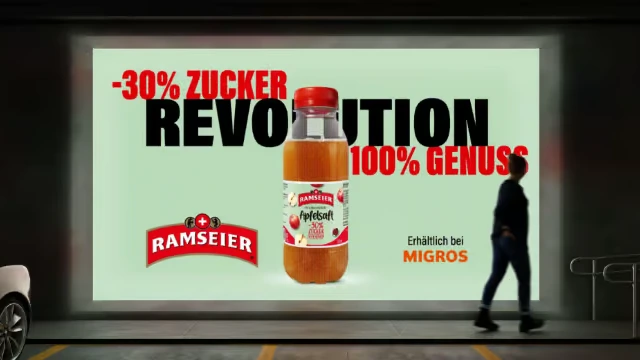
Ramseier
Reduced-sugar apple juice DOOH, built from the same idea as its interactive banners.
Read the case studyFAQ
What is a D6 screen?
A D6 is a digital 6-sheet: a portrait digital screen about the size of a bus shelter poster, found at roadsides, in shopping centres, rail stations and supermarkets across the UK.
What size is a D6?
D6 screens are portrait, 9:16, at 1080 x 1920 pixels on the major UK networks.
How long is a D6 ad?
It depends on the owner and environment. JCDecaux roadside D6 slots are 12 seconds and its mall, rail and supermarket D6 slots are 6 seconds. Global D6 slots are 10 seconds.
Can D6 ads move?
Roadside D6 is usually static only. Mall, rail and retail D6 often accept motion as MP4 at the owner’s frame rate, such as 25 fps for JCDecaux or 30 fps for Global.
What file format should D6 artwork be?
Supply RGB JPEG or PNG for static ads and H.264 MP4 without audio for motion, at exactly 1080 x 1920 pixels.
Need help with
creative production?
If you’re planning a campaign or need reliable digital creative production at scale, we can help. Send us your requirements and we’ll advise on formats, builds and delivery.
Booked Adshel Live or Billboard Live? Send us the booking and we’ll scope and price the content upfront.