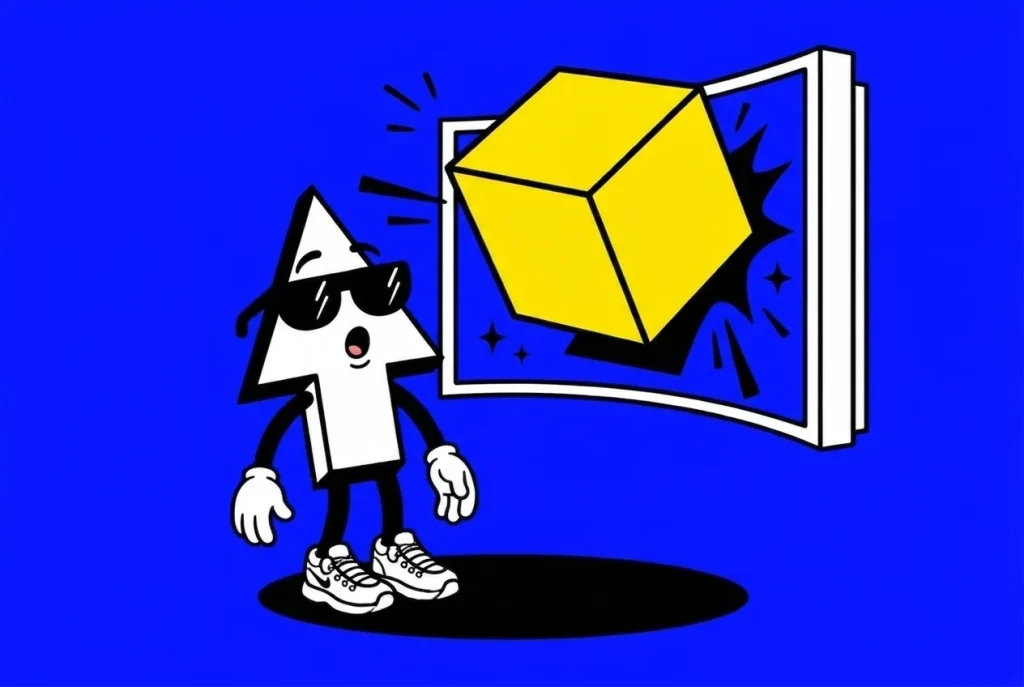
3D billboards are the ads that seem to burst out of the screen: a shoe stepping over the edge, a wave crashing out of a building. No glasses, no special screen. It’s an optical trick called anamorphic illusion, or forced perspective.
They get filmed, shared and talked about, which is why brands book them for big launches. This guide explains how they work, what makes one convincing and how we plan 3D content for landmark screens such as those sold by Ocean Outdoor.
Key Takeaways
- A 3D billboard is a normal LED screen showing content distorted to look 3D from one viewpoint.
- Corner and curved screens make the effect stronger because the image wraps two faces.
- The illusion only works from a sweet spot, so the viewing position comes first.
- Content is built in 3D software with a virtual camera matched to that viewpoint.
- Expect more time and budget than a flat DOOH ad, and plan the shareable moment.
How Anamorphic Billboards Work
The screen is flat. The trick is in the content. Designers build the scene in 3D, then render it as if seen from one exact spot on the street. From there, the distortion lines up and your brain reads depth. From anywhere else, it looks stretched.
A fake frame or box is often drawn inside the screen. When an object breaks out of that frame, it seems to leap into the real world.
Why Corner Screens Work Best
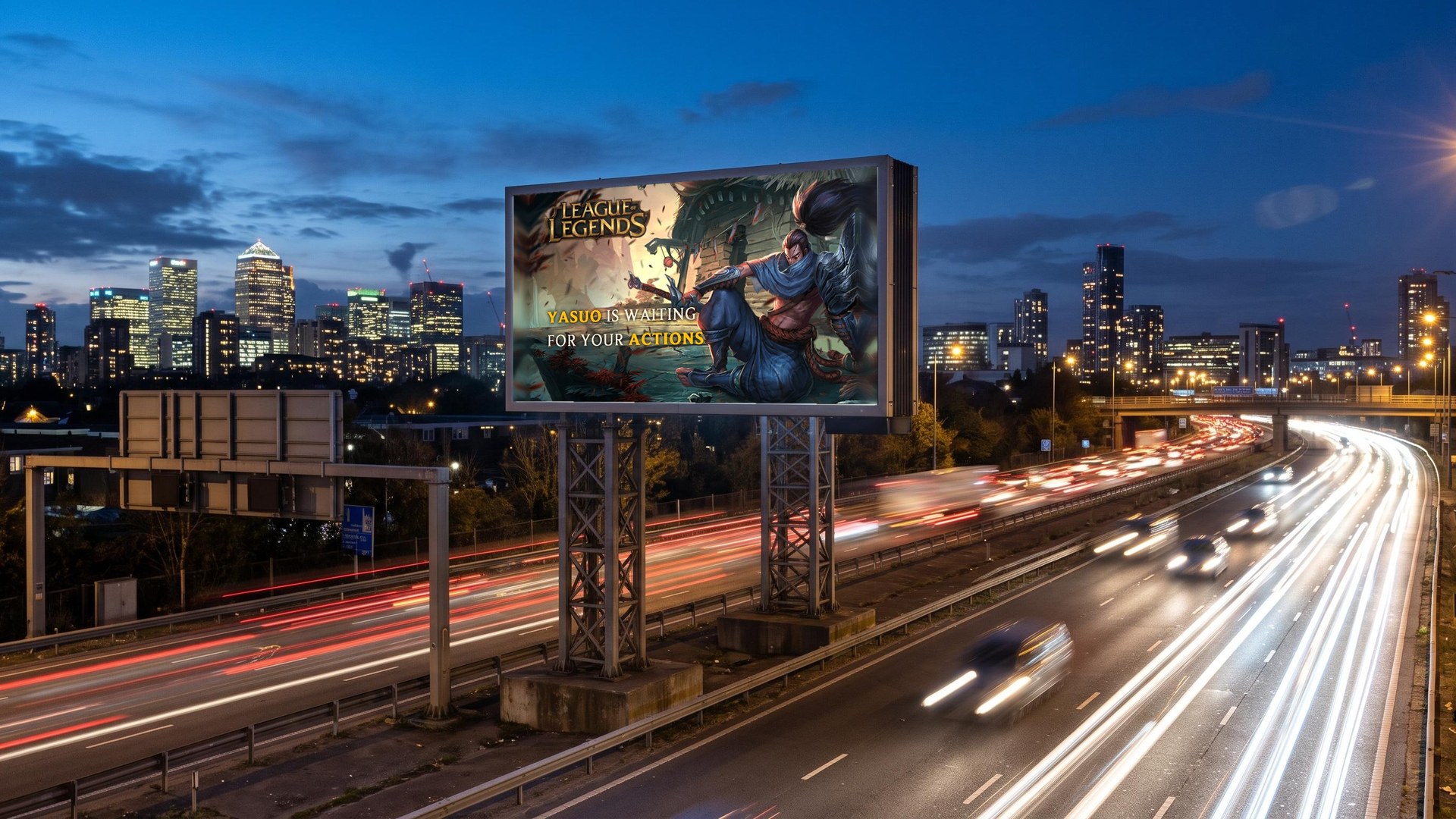
Corner, L-shaped and curved screens wrap the image across two faces. That gives the eye stronger depth cues and lets the illusion work across a wider area of the street. Corner units aren’t required, but they make a big difference.
On a flat screen, the effect still works, but the sweet spot is smaller and the frame trick does more of the work.
The Viewing Sweet Spot
Every 3D billboard is designed for a viewing position. Before we model anything, we look at the site: where people stand, where they cross, where they will film from. That point becomes the virtual camera.
Get it wrong and most viewers see a distorted mess. Get it right and you get crowds filming on their phones, which is where most of the reach comes from.
| Flat DOOH ad | 3D anamorphic ad | |
|---|---|---|
| Screen | Any digital screen | Best on corner, curved or large screens |
| Viewing | Works from any angle | Built for one sweet spot |
| Production | 2D design and motion | 3D modelling, lighting and renders |
| Lead time | Days | Weeks |
| Best for | Always-on and tactical | Launches and talkability |
| Social value | Low | High, people film it |
How We Make a 3D Billboard
- Site survey: screen size, shape, pixel map and the main viewing points.
- Concept: one clear moment of breakout, built around the product.
- Mock-up: a rough render on a photo of the site to test the angle.
- 3D build: modelling, lighting and animation in 3D software.
- Render: to the exact pixel size and slot length on the site spec sheet.
- Test: checked on site or in a site simulation before it goes live.
Planning a 3D Campaign
- Book the screen first. The site decides the design.
- Allow more lead time than flat DOOH, as modelling and renders take longer.
- Plan the social cut. Film the screen on day one and post it.
- Keep the brand on screen. A spectacle nobody can attribute is wasted.
- Have a flat version ready for other screens in the plan.
Budgeting the media? Read our billboard advertising costs guide, and see code-driven motion for lighter ways to add movement.
Last updated 14 November 2026.
Sources: Billups: what is a 3D billboard, Billboard Insider: Piccadilly Lights.
From Our Studio
Real campaigns we’ve built, with the full story in each case study.

Spa
Spa Duo launch creative on transport DOOH screens, alongside HTML5 display.
Read the case study
Kärcher
A modular DOOH and HTML5 system, delivered to every media owner’s spec.
Read the case study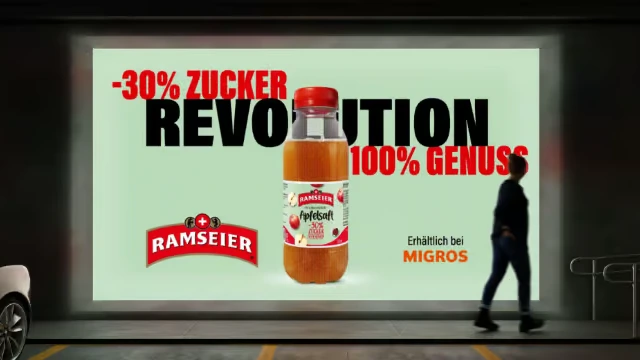
Ramseier
Reduced-sugar apple juice DOOH, built from the same idea as its interactive banners.
Read the case studyFAQ
How do 3D billboards work?
They show content rendered from one viewpoint with forced perspective. From that spot, the distortion lines up and the image seems to jump out of the screen.
Do you need glasses to see a 3D billboard?
No. It is an optical illusion on a normal LED screen, so no glasses or special technology are needed.
Why are 3D billboards on corner screens?
Corner and curved screens wrap the image across two faces, which gives stronger depth cues and a wider viewing area.
Can you make 3D anamorphic content?
Yes. We plan the viewing angle, model and animate the scene in 3D, and render it to the site’s exact spec.
How long does a 3D billboard take to make?
Longer than flat DOOH, usually a few weeks, because the scene is modelled, lit and rendered in 3D and tested against the site.
Can a 3D ad run on any screen?
The effect works best on large, corner or curved screens. On small or flat screens the sweet spot is smaller, so we plan the design around the site.
Need help with
creative production?
If you’re planning a campaign or need reliable digital creative production at scale, we can help. Send us your requirements and we’ll advise on formats, builds and delivery.
Booked a landmark screen? Send us the site spec and we’ll scope and price the 3D content upfront.