Ask for a billboard and you could mean anything from a poster in a bus shelter to a 40-foot roadside site. The UK out-of-home industry still measures most formats in “sheets”, and digital screens add their own pixel sizes on top, so it is easy to design artwork at the wrong size or ratio.
We design billboard and DOOH creative for brands, agencies and media owners, and this is the size guide we work from in 2026: every common UK format, its dimensions, where you will find it and how to design for it.
Key Takeaways
- The most common UK formats are 6 sheet (1200x1800mm portrait) and 48 sheet (6096x3048mm landscape).
- 4 sheet is 1016x1524mm, 12 sheet is 3048x1524mm and 96 sheet is 12192x3048mm.
- Digital D6 screens are portrait and typically 1080×1920 pixels.
- Digital D48 screens share the 2:1 landscape shape of a 48 sheet, but pixel sizes vary by media owner and site.
- Always design from the media owner’s spec sheet, and keep key content away from the edges.
UK Billboard Sizes at a Glance
Here are the standard UK out-of-home formats, from small street-level posters to the largest roadside billboards, plus the two most common digital formats.
| Format | Orientation | Size | Where you will see it |
|---|---|---|---|
| 4 sheet | Portrait | 1016 x 1524 mm | Rail stations, shopping centres |
| 6 sheet | Portrait | 1200 x 1800 mm | Bus shelters, high streets, malls |
| 12 sheet | Landscape | 3048 x 1524 mm | Roadsides, retail parks |
| 48 sheet | Landscape | 6096 x 3048 mm | Major roadsides |
| 96 sheet | Landscape | 12192 x 3048 mm | Major roads into cities |
| D6 (digital 6 sheet) | Portrait | Typically 1080 x 1920 px | Roadsides, malls, stations |
| D48 (digital 48 sheet) | Landscape | Varies by site, usually 2:1 | Major roadsides |
New to billboards? Read what billboard advertising is and how it works.
What Does “Sheet” Mean?
Billboard formats are named after the number of standard paper sheets that were once pasted together to make the poster. A 48 sheet billboard was literally made up of 48 smaller sheets, and a 6 sheet of six.
The name stuck even though posters are now printed in far fewer pieces, and digital screens borrowed it too. That is why a portrait digital screen at a bus shelter is called a D6, and a large roadside screen a D48.
6 Sheet and 4 Sheet Posters
The 6 sheet is the workhorse of street-level advertising. At 1200x1800mm portrait, it appears in bus shelters, on high streets, in shopping centres and at roadside, usually behind glass and often backlit. Because the frame covers the edges, the visible area is slightly smaller than the artwork, so keep logos and text well inside the edges.
The 4 sheet, at 1016x1524mm portrait, is a smaller format mainly found in rail and Underground stations and shopping centres, where people view it from a few metres away.
48 Sheet and 96 Sheet Billboards
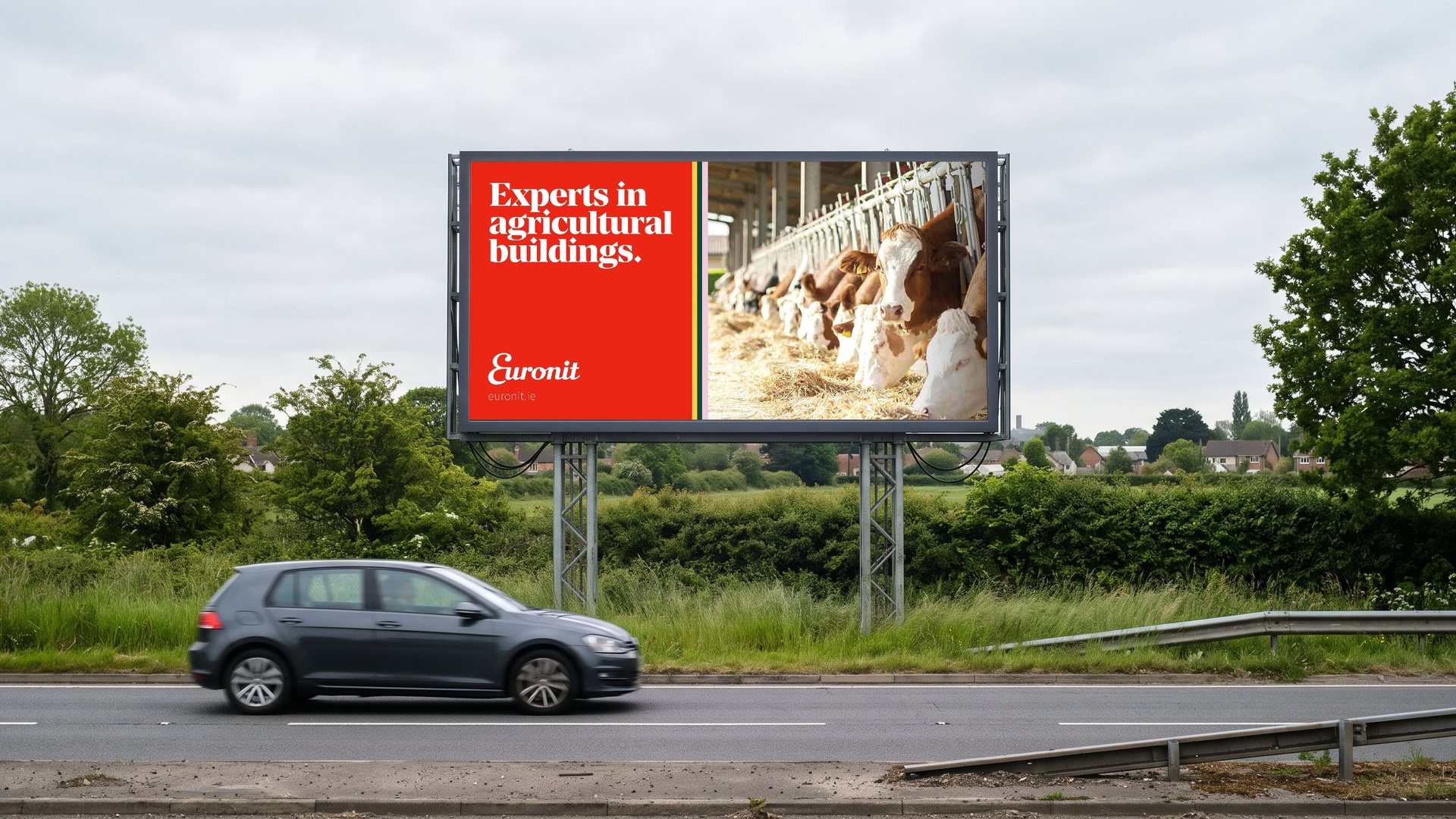
The 48 sheet is the classic UK roadside billboard: 6096x3048mm, or 20 by 10 feet, in a 2:1 landscape shape. It is designed to be seen by drivers and passengers from a distance, so it rewards bold, simple creative.
The 96 sheet doubles the width to 12192x3048mm, or 40 by 10 feet. These are found on major roads and approaches into cities, and are bought for maximum impact. The 12 sheet, at 3048x1524mm, is a smaller landscape format often seen at roadsides and retail parks.
Digital Billboard Sizes: D6 and D48
Digital screens are measured in pixels, not millimetres. The D6, or digital 6 sheet, is a portrait screen at roadsides, bus shelters, malls and stations, and is typically 1080×1920 pixels.
The D48 is the digital version of the roadside 48 sheet. Most share its 2:1 landscape shape, but the exact pixel dimensions vary by media owner and by site, and landmark screens have bespoke sizes of their own. Ads usually run as short spots of around 5 to 10 seconds within a rotating loop, and many roadside screens only allow static images for road safety, so check each site’s rules before designing motion.
Designing for Each Billboard Size
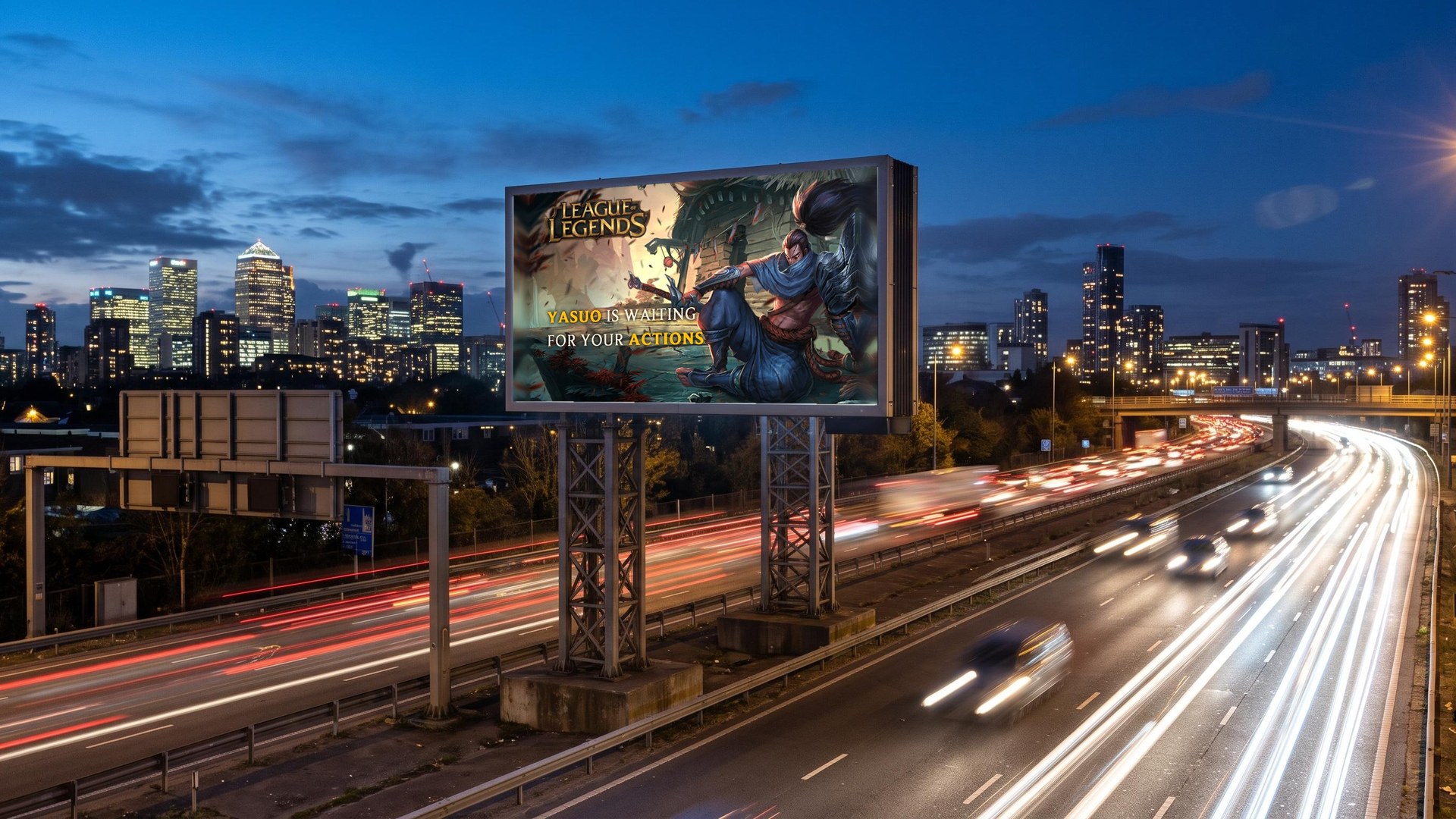
The bigger the format, the further away people usually are, and the less time they have. A 48 sheet beside a busy road gets a glance from a moving car, while a 6 sheet in a shopping centre can be read from a few steps away.
Whatever the size, keep it simple: one message, a strong visual and as few words as possible, often around seven plus the brand. Use large type and high contrast, and test the design at a small size on screen. If it does not work as a thumbnail, it will not work on the roadside.
A Billboard Artwork Checklist
- Confirm the exact format and spec sheet for every site on the plan.
- Match the size and orientation: portrait for 4, 6 and D6, landscape for 12, 48, 96 and D48.
- For digital, design at the exact pixel size of the screen, in RGB.
- For print, follow the printer’s scale, bleed and CMYK requirements.
- Keep logos, text and calls to action away from the edges and any frame.
- Check motion, duration and file format rules before animating for digital screens.
Our digital billboard design team produces artwork for every format on your plan, built to each media owner’s specs.
Sources: Route: OOH audience measurement, Outsmart: Large Format Digital Roadside Code.
FAQ
What is the most common billboard size in the UK?
The 48 sheet, at 6096x3048mm (20 by 10 feet), is the standard roadside billboard. At street level, the 6 sheet at 1200x1800mm is the most common format.
What size is a 6 sheet poster?
A 6 sheet is 1200x1800mm portrait. The visible area is slightly smaller because the frame covers the edges, so keep key content inside a safe margin.
What size is a 48 sheet billboard?
A 48 sheet billboard is 6096x3048mm, or 20 by 10 feet, in a 2:1 landscape ratio.
What resolution is a digital billboard?
Portrait D6 screens are typically 1080×1920 pixels. Roadside D48 screens usually share a 2:1 landscape ratio, but their pixel size varies by media owner and site, so always check the spec sheet.
What file format should digital billboard ads be?
Usually JPG or PNG for static ads and MP4 with H.264 for motion, at the exact pixel size of the screen. Each media owner sets its own limits on file size, duration and motion.
Need help with
creative production?
If you’re planning a campaign or need reliable digital creative production at scale, we can help. Send us your requirements and we’ll advise on formats, builds and delivery.
For billboard, transport and retail screen design, see our DOOH advertising hub.