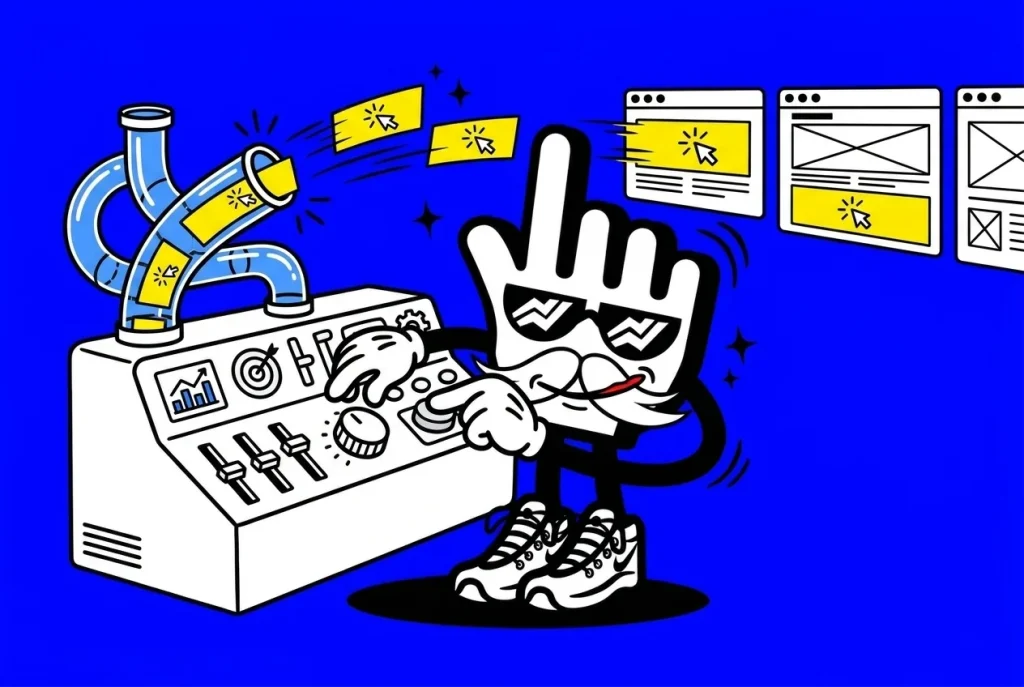
Programmatic advertising is buying ad space automatically. Software bids for each impression as a page, app or screen loads, instead of a person booking placements with each publisher. In the UK it is now the default way display is bought: IAB UK found programmatic made up 78% of digital display spend in the first half of 2025.
Most guides stop at the ad tech. This one also covers what programmatic means for the creative, from a studio that builds and traffics banners for DV360, The Trade Desk and CM360.
Key Takeaways
- Programmatic is the how of buying; display, video, audio, CTV and DOOH are the what.
- Advertisers buy through a DSP, publishers sell through an SSP, and an auction decides each impression in milliseconds.
- There are four deal types, from open auction to programmatic guaranteed, trading reach against control.
- DSPs enforce hard creative limits: DV360 and The Trade Desk both work to 150KB on initial load for standard display.
- Most rejections and wasted spend come from creative problems: missing clickTags, oversize files and incomplete size sets.
What Is Programmatic Advertising?
Programmatic advertising uses software to buy and place ads. The advertiser sets the audience, budget, bids and creative. The platform then decides, impression by impression, which ones to buy and what to pay.
It is a buying method, not an ad format. A 300×250 banner can be bought programmatically or booked directly with a publisher. The banner is the same either way. Only the route to the page changes. Our guide to what display advertising is covers the formats themselves.
How Does Programmatic Advertising Work?
- DSP (demand-side platform): where advertisers and agencies buy, such as DV360, The Trade Desk or Amazon DSP.
- SSP (supply-side platform): where publishers offer their inventory to many buyers at once.
- Ad exchange: the marketplace where bid requests and bids meet.
- Ad server: hosts the creative, serves it and counts impressions and clicks, such as CM360 or Adform.
- Data: first-party lists, contextual signals and third-party audiences that decide who to bid on.
A single impression runs like this:
- A user opens a page. The publisher’s SSP sends a bid request describing the slot, page and user, in the IAB Tech Lab OpenRTB format.
- Each DSP checks the request against its campaigns and decides whether to bid, and how much.
- The highest valid bid wins. The DSP returns the ad markup, usually a tag that calls the ad server.
- The ad server delivers the creative and logs the impression. All of this happens while the page loads.

| Deal type | Auction? | Price | Best for |
|---|---|---|---|
| Open auction (RTB) | Yes, open to all buyers | Variable | Reach and performance at scale |
| Private marketplace (PMP) | Yes, invite only | Floor set by publisher | Premium sites with some control |
| Preferred deal | No | Fixed, agreed in advance | First look at a publisher's inventory |
| Programmatic guaranteed | No | Fixed, volume reserved | Big brand campaigns and sponsorships |
What Are the Types of Programmatic Buying?
The table above sums up the four deal types. Two points matter for creative. Guaranteed deals and PMPs often come with publisher specs on top of the DSP’s, such as a lower file weight or a specific skin or takeover format. Open auction runs across thousands of sites, so the creative has to work in every slot you buy.
Programmatic also covers more than banners. Connected TV and digital out-of-home screens are bought through the same DSPs, each with its own creative specs.
What Creative Does Programmatic Need?
These are the limits we build to for standard display. Check the platform’s current help pages before each campaign, because they change.
- Initial load: DV360’s mobile guidelines allow 150KB on initial load, with any further polite load capped at 2.2MB. The Trade Desk’s creative specification also sets 150KB for display.
- Total download: DV360 caps the total download for an HTML5 ad at 5MB, but publishers can require less.
- Click tracking: DV360 requires HTML5 display ads to use a clickTag for the landing page. Hard-coded URLs break tracking, and many are rejected. See our clickTag guide.
- Size set: the more sizes you supply, the more auctions you can enter. Our core set is 300×250, 728×90, 160×600, 300×600, 320×50, 320×100 and 970×250. See the ad sizes hub.
- Formats: HTML5 for animation, plus a static backup image for every size.
- Variants: one version per audience, product or offer. Past a handful of versions, dynamic creative is cheaper to run.
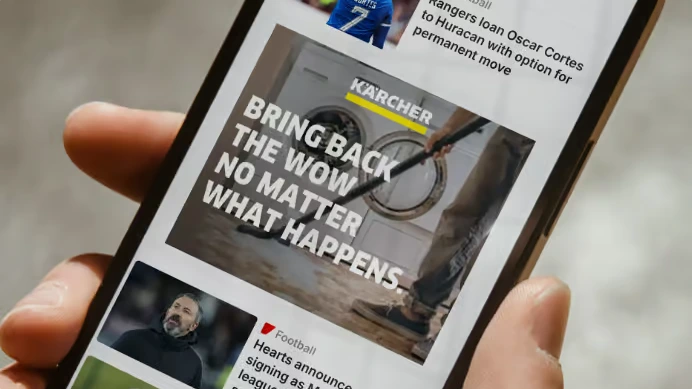
How We Build Creative for Programmatic Campaigns
- Master first. We design and approve the 300×250 and 728×90 before building other sizes, so feedback is given once and not seven times.
- Adapt the set. Each size is laid out for its own shape. We don’t scale one design up and down. The logo, offer and CTA stay visible in every frame at every size.
- Build to the weight. We use SVG and sprite sheets, subset fonts and compressed images. Any heavy assets load politely after the page has loaded.
- QA against the DSP. We run Google Web Designer or the platform validator, test the clickTag and check the backup image. Then we preview on real devices.
- Traffic. We deliver either zips for direct upload to the DSP, or CM360 tags when the agency ad-serves. This decision is made at the brief, because it changes the build.
Why Do Programmatic Ads Get Rejected or Underperform?
- Missing or broken clickTag: a common reason for rejection, and click reporting breaks with it.
- Over the initial load limit: the creative either fails upload or loses bids on publishers with tighter caps.
- Missing sizes: the budget concentrates on fewer slots, so costs go up and reach goes down.
- Message on the last frame: most people never see frame three. Show the product and offer in frame one.
- No refresh plan: the same creative across months of open-auction impressions causes fatigue. Plan rotations when you plan the media.
- No border on white: a light ad on a white page can look like part of the site. Many publishers require a 1px border.
Is Programmatic Advertising Still Allowed Under UK Privacy Rules?
Yes. Targeting with personal data needs a lawful basis under UK GDPR, and consent for cookies under PECR, usually collected by the publisher’s consent platform. The ICO has criticised real-time bidding in the past over how much personal data is shared in bid requests. Google has also dropped its plan to remove third-party cookies from Chrome and retired most Privacy Sandbox APIs in October 2025. Contextual targeting and first-party data are growing anyway. This is general information, not legal advice: have your legal or data protection lead check your setup.
Planning a campaign? Send us your brief with the DSP, the sizes and any publisher specs, and we’ll quote for the full set.
Last updated 19 November 2026.
Sources: IAB UK HY 2025 Digital Adspend, DV360: HTML5 display guidelines, DV360: mobile creative guidelines, The Trade Desk creative specifications, IAB Tech Lab: OpenRTB.
From Our Studio
Real campaigns we’ve built, with the full story in each case study.

ElevenLabs
HTML5 display and rich media page takeovers on premium news sites, introducing the platform at scale.
Read the case study
Eternit
HTML5 display ads for fibre cement roofing, built to platform spec and designed to drive free sample requests.
Read the case study
Cedral
A multilingual HTML5 campaign across 7 countries, built as one flexible system for different personas and markets.
Read the case studyFAQ
What is programmatic advertising in simple terms?
It is buying ad space automatically with software, one impression at a time, instead of booking placements by hand with each publisher.
What is the difference between programmatic and display advertising?
Display is the ad format, such as banners and rich media. Programmatic is the way that inventory is bought. Most UK display is now bought programmatically.
What is the difference between a DSP and an SSP?
Advertisers use a DSP, such as DV360 or The Trade Desk, to buy impressions. Publishers use an SSP to sell their inventory to many DSPs at once.
What file size should programmatic banners be?
Build to 150KB on initial load for standard display. That is the limit in DV360’s mobile guidelines and The Trade Desk’s creative specifications. Always check publisher specs too.
Is real-time bidding the same as programmatic?
No. Real-time bidding is the open auction part of programmatic. Private marketplaces, preferred deals and programmatic guaranteed are also programmatic, but some of them have no auction.
Need help with
creative production?
If you’re planning a campaign or need reliable digital creative production at scale, we can help. Send us your requirements and we’ll advise on formats, builds and delivery.
Need a full programmatic size set? We build HTML5 and static banners for every DSP, scoped and priced upfront.