Since 5 January 2026, the UK has banned paid online ads for identifiable “less healthy” food and drink, 24 hours a day. TV and on-demand get a 9pm watershed on top. If you run food or drink campaigns, it changes what your banners, social ads and video can show.
Most of what’s ranking right now is news coverage. This is the practical version: what’s banned, what isn’t, what the first ASA rulings tell us, and how to build creative that still sells without getting pulled. We produce food and drink advertising every week, so this is the checklist we actually work from.
Key Takeaways
- Paid online ads for identifiable less healthy (LHF) products are banned in the UK at all times from 5 January 2026.
- Broadcast TV and Ofcom-regulated on-demand can’t show them between 5.30am and 9pm.
- A product is LHF only if it’s HFSS under the nutrient profiling model and sits in one of 13 product categories.
- Brand ads are allowed if they don’t show or identify a specific LHF product.
- DOOH, owned media, audio-only ads, B2B ads and businesses with fewer than 250 employees are outside the ban.
- The ASA enforces it, and serious or repeat breaches can go to Ofcom for fines.
What Is the UK Junk Food Advertising Ban?
Officially it’s the “less healthy food and drink” (LHF) advertising restriction, brought in by the Health and Care Act 2022. Most people still call it the HFSS or junk food ad ban.
There are two parts. Online, paid ads for identifiable LHF products are banned outright, whatever the audience age and whatever the time of day. On broadcast TV and Ofcom-regulated on-demand services, LHF ads can only run between 9pm and 5.30am. The government asked the industry to comply voluntarily from 1 October 2025, and the rules became law on 5 January 2026.
Which Products Count as “Less Healthy”?
A product is only caught if it passes two tests. First, it must be HFSS under the Department of Health’s 2004/05 nutrient profiling model: 4 points or more for a food, or 1 point or more for a drink. Second, it must fall into one of 13 product categories.
- Soft drinks with added sugar
- Savoury snacks such as crisps
- Breakfast cereals
- Chocolate and sweets
- Ice cream and lollies
- Cakes, sweet biscuits and bars
- Morning goods like croissants and pastries
- Desserts, puddings and sweetened yoghurts
- Pizza, ready meals and breaded or battered products
Both tests matter. A croissant that scores as HFSS is caught because morning goods are on the list. The same croissant reformulated below the threshold isn’t. So the first job on any food campaign is a nutrient score for every SKU that might appear in the creative.
| Channel | Identifiable LHF product ads |
|---|---|
| Paid social, display, programmatic and search | Banned at all times |
| Paid creator and influencer posts | Banned at all times |
| Promoted listings on delivery and price comparison sites | Banned at all times |
| Broadcast TV and Ofcom-regulated on-demand | Not between 5.30am and 9pm |
| DOOH, billboards and posters | Outside the ban (CAP Code and landlord rules still apply) |
| Your own website and organic social | Outside the ban |
| Podcasts and online radio (audio only) | Outside the ban |
| B2B ads | Outside the ban |
| Brand ads with no specific LHF product | Allowed everywhere |
The Brand Ad Exemption: What You Can Still Show
This is where most of the creative opportunity sits. Brand ads are allowed, as long as an average consumer couldn’t identify a specific LHF product from them. In practice that means:
- Allowed: your brand name, logo and range branding, as long as the range has variants such as flavours.
- Allowed: products that aren’t LHF, including non-HFSS versions within an LHF category.
- Allowed: generic food imagery and packaging that doesn’t point to one product.
- Not allowed: naming an LHF product, or showing its packaging.
- Not allowed: a realistic image that looks identical to an LHF product.
- Not allowed: enough clues, such as flavours, ingredients or colours, to work out which LHF product it is.
- Not allowed: a brand name that matches an LHF product name, unless it was in use or held before 16 July 2025.
Sponsorships count too. A food brand sponsoring a football club or a festival still can’t put a specific LHF product in the paid creative.
What the First ASA Rulings Tell Us
The ASA published its first batch of rulings in 2026, and they’re the clearest guide to where the line sits.
- KFC, not upheld: five TV, on-demand and social ads featured products KFC showed were non-HFSS, so they counted as brand ads.
- Domino’s, not upheld: it showed a Vegi Supreme on a classic crust, which is non-HFSS. The less healthy crusts looked different enough.
- Papa John’s, not upheld: a “from only £10” Facebook ad showed a non-HFSS pizza. The only HFSS version came in a different size with a different slice count.
- Uber Eats, not upheld: the Whopper it showed is non-HFSS. The ruling confirmed that a delivery platform paying for the ad is covered by the rules, even though it doesn’t make the food.
- M&M’s, upheld: no packaging or sweets appeared, but the oval yellow character is shaped like a Peanut M&M, so the ad identified an LHF product.
- Morley’s franchise, upheld: an Instagram meal deal showed burgers, wings and fries. The franchise network employs over 250 people, so the SME exemption didn’t apply.
The pattern is simple. Show products you can prove are non-HFSS, make sure they can’t be mistaken for a less healthy version, and treat brand characters and product shapes as if they were packshots.
Does the Ban Cover DOOH and Billboards?
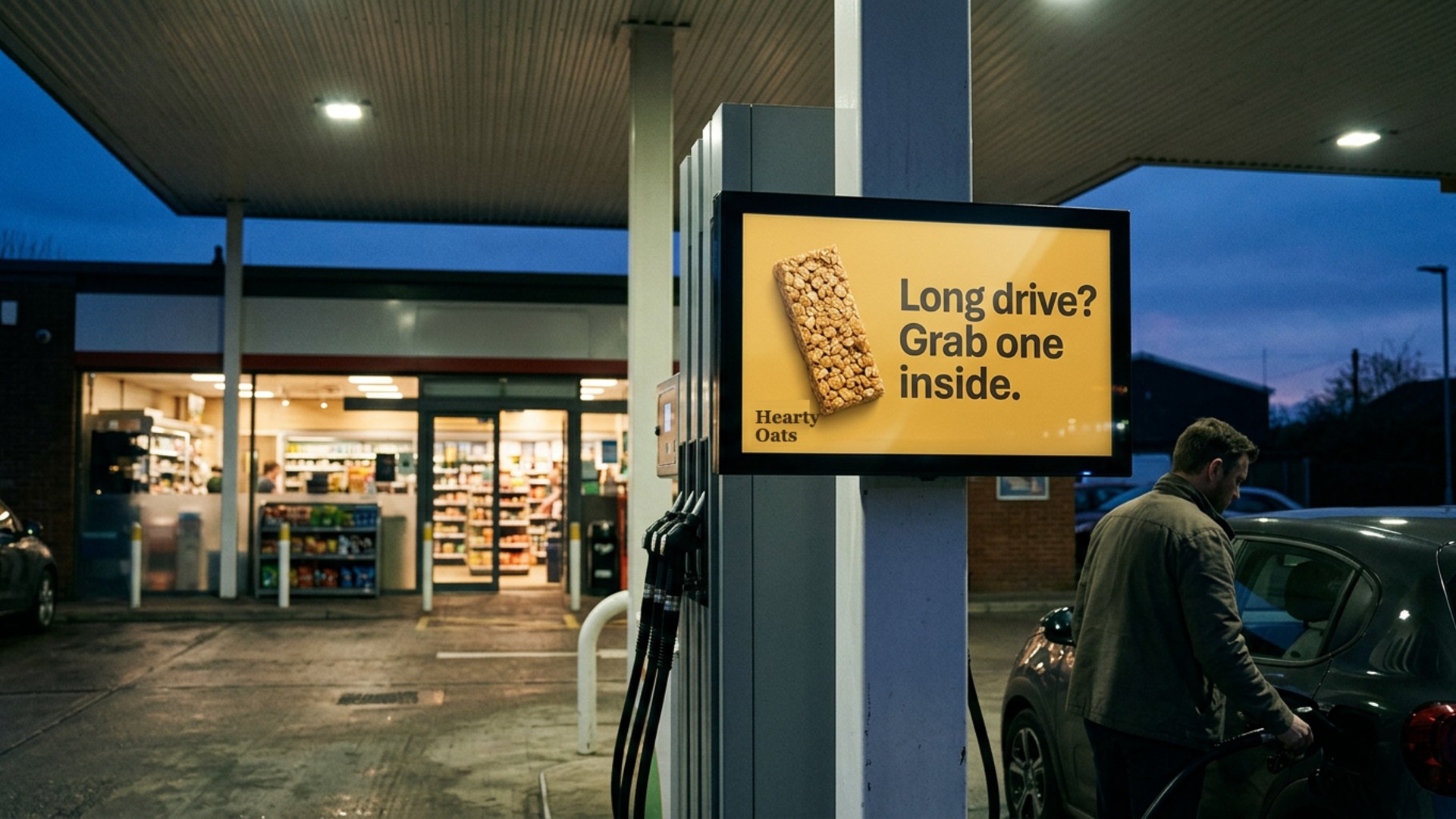
No. Digital out-of-home isn’t treated as advertising “on the internet”, so roadside, transport and retail screens sit outside the online ban, and so do paper posters. That makes DOOH one of the few paid channels where food brands can still show products.
Two catches. Existing CAP Code rules still apply to HFSS ads in non-broadcast media, so they can’t run in media where under-16s make up more than a quarter of the audience. And some landlords set their own rules: Transport for London has restricted HFSS ads across its network since 2019. Always check the media owner’s policy before you brief the creative.

Are Small Businesses Exempt?
Yes. Businesses with fewer than 250 employees can keep advertising LHF products they make or sell, and they must be able to prove their SME status if the ASA asks. The headcount includes the whole franchise network, which is exactly what caught Morley’s.
Who Enforces It, and What Happens If You Break It?
The ASA enforces the rules day to day. If an ad breaks them, the advertiser has to change it or pull it. Serious or repeat breaches can be referred to Ofcom, which can issue fines. The legal responsibility sits with whoever pays for the ad, but agencies, creators and platforms are expected to tighten their own checks too.
Last updated 14 November 2026. This guide explains the rules as they apply to ad creative. It isn’t legal advice, so check borderline products with your legal team or the ASA’s Copy Advice service.
Sources: IAB UK, ASA: less healthy products, GOV.UK: products in scope and Lewis Silkin: first ASA rulings.
How We Produce Food and Drink Ads
We are a production studio, so this is where we come in: turning a food and drink campaign idea into every format the media plan needs.
- Appetite appeal at every size: food photography re-cropped for 300 x 250, 9:16 and D6, not just shrunk.
- Menu boards and in-store screens scheduled by time of day.
- Rules checks: less healthy food and alcohol ads have UK restrictions on where and how they run, so we check briefs against them. See the junk food ad ban and alcohol advertising rules.
- Weather and time triggers for DOOH: cold drinks on hot days, breakfast in the morning.
See our food and drink advertising page, read more in Best food ads, Alcohol advertising rules UK, or send us your brief.
How to Build Food Ads That Stay Compliant
Here’s the checklist we run on every food and drink job, from Papa Johns’ match-day bundles to Spa’s flavour launches:
- Get a nutrient profile score for every SKU that could appear, and keep the evidence on file.
- Build a brand-led master first, then add product variants only for SKUs you’ve confirmed are non-HFSS.
- Don’t let characters, shapes or colourways stand in for an LHF product.
- Version DOOH separately. It can show more product, but check under-16 audience rules and landlord policies.
- Brief creators the same way as paid media. Gifted and affiliate posts that show LHF products count as paid ads.
- Keep versions tidy across sizes, retailers and platforms, so nothing non-compliant slips into a resize.
From Our Studio: Food and Drink Campaigns
Real food and drink work, with the full story in each case study.

Papa Johns
A match-day HTML5 campaign with STV promoting the Big Match Bundle, timed around live rugby to drive immediate orders.
Read the case study
Ramseier
An interactive HTML5 banner where people catch falling apples to unlock a discount on reduced-sugar apple juice.
Read the case study
Kärcher
A modular HTML5 and DOOH system, localised across languages and markets and delivered to every media owner’s spec.
Read the case studyFAQ
Is junk food advertising banned in the UK?
Yes. Since 5 January 2026, paid online ads for identifiable less healthy food and drink are banned at all times, and TV and on-demand ads for them can’t run between 5.30am and 9pm.
What counts as a less healthy product?
A product that is HFSS under the 2004/05 nutrient profiling model (4 or more points for food, 1 or more for drinks) and also falls into one of 13 categories, such as savoury snacks, confectionery, sugary soft drinks, cakes, pizza and ready meals.
Can food brands still advertise online?
Yes. Brand ads are allowed if they don’t show or identify a specific less healthy product. You can also advertise products that aren’t HFSS.
Does the ban apply to billboards and DOOH?
No. Digital out-of-home and posters are outside the online ban, but existing CAP Code rules on HFSS ads and landlord policies, such as Transport for London’s, still apply.
Are small businesses exempt?
Businesses with fewer than 250 employees, including the whole franchise network, are exempt and can advertise LHF products they make or sell. They must be able to prove it if the ASA asks.
Do influencer posts count?
Yes. Paid, gifted and affiliate creator content that shows a specific less healthy product counts as a paid ad and is banned.
Who enforces the junk food ad ban?
The Advertising Standards Authority. It can make advertisers change or remove ads, and refer serious or repeat breaches to Ofcom, which can issue fines.
Need help with
creative production?
If you’re planning a campaign or need reliable digital creative production at scale, we can help. Send us your requirements and we’ll advise on formats, builds and delivery.
Food or drink campaign coming up? We’ll build brand-led display, DOOH and social sets that clear the new rules, scoped and priced upfront.